
Van Eeghenstraat 64 Amsterdam and the Hidden History of Oud Zuid Living

Door Lotte van Dijk · 6 april 2026
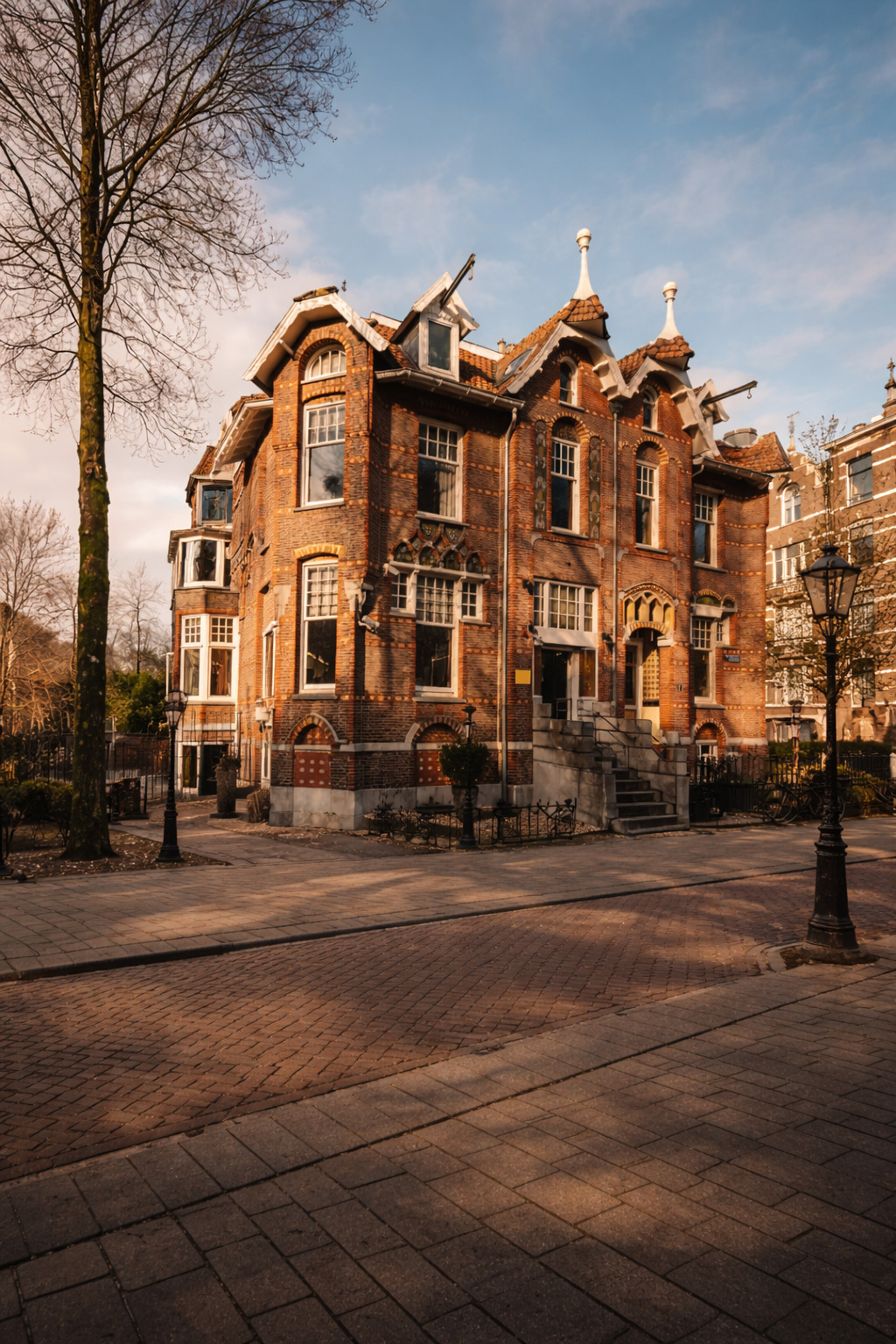
At first glance, the building at Van Eeghenstraat 64, 1071 GK Amsterdam appears as another refined example of late 19th-century Dutch residential architecture. Decorative brickwork, asymmetrical façade, steep rooflines — visually expressive, but consistent with the district.
What is less visible is the context in which this house was built, and the type of life it was designed to contain.
The Street That Was Never Meant for Trade
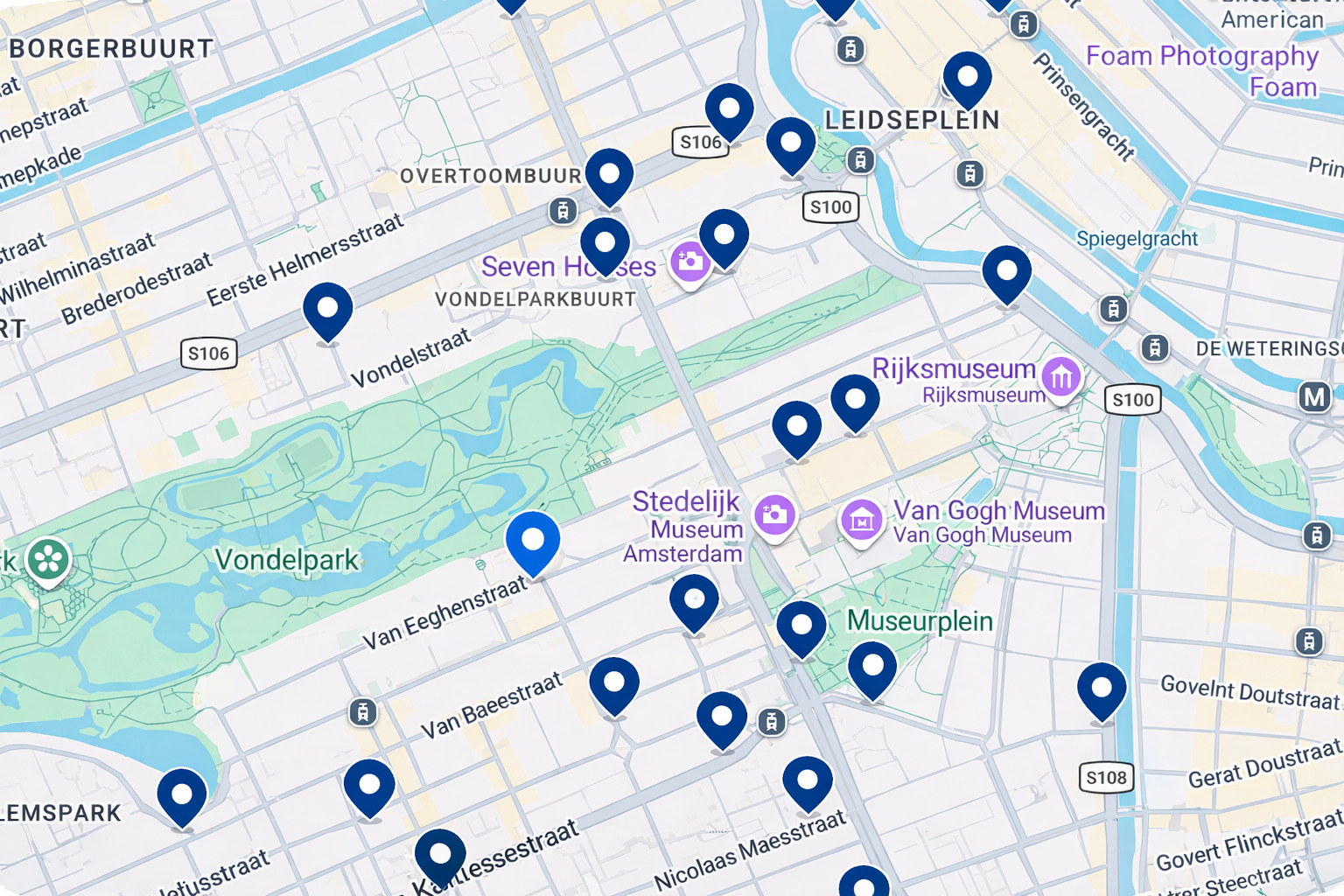
Van Eeghenstraat is located in Amsterdam Oud-Zuid, an area that developed during the city’s expansion in the late 1800s. Unlike the canal belt, which was shaped by commerce, this district was planned as a residential zone for the upper middle class and urban elite.
The street itself takes its name from the Van Eeghen family, a prominent Amsterdam banking and merchant dynasty active since the 17th century. Their influence extended beyond finance into urban development, cultural patronage, and land ownership.
By the time Van Eeghenstraat was laid out, Amsterdam was transitioning from a trade-dominated city into a more structured European capital. This area reflects that shift: wider streets, more light, proximity to green space — and distance from the intensity of the historic center.
A House Built for Stability, Not Movement
Unlike the narrow canal houses designed for trade, homes in this part of the city followed a different logic.
Van Eeghenstraat 64 was constructed as a private residence, not a mixed-use building. Its layout would have included:
clearly separated living and service areas
larger rooms with higher ceilings
access to light from multiple sides
This was architecture designed for permanence rather than turnover.
Residents here were typically:
professionals
financiers
cultural figures
families with stable income and long-term presence.
Who Lived Here
Residences along Van Eeghenstraat, including No. 64, were never anonymous. From their construction in the late 19th century, these houses were occupied by a clearly defined social group — Amsterdam’s upper bourgeoisie, a class positioned between old merchant wealth and emerging professional elites.
Archival patterns from Oud-Zuid show that tenants in this area were typically:
private bankers and partners in trading firms
legal professionals and notaries
senior civil servants
physicians and academics connected to Amsterdam’s growing institutional network
This was not inherited canal wealth of the 17th century, but a modern urban elite, shaped by finance, administration, and culture.
The timing is critical.
Van Eeghenstraat developed during a period when Amsterdam was expanding beyond its historic canal belt. At the same moment, the city was consolidating its cultural identity. The opening of the Rijksmuseum in 1885 transformed the surrounding area into a cultural axis. Later, the arrival of the Stedelijk Museum (1895) and eventually the Van Gogh Museum (1973) reinforced this shift.
Living at Van Eeghenstraat 64 meant occupying a position within that emerging structure.
Residents were not only economically stable, but spatially selective. They chose proximity to institutions that defined intellectual and cultural capital, while deliberately avoiding the density and commercial pressure of the old center.
Unlike canal houses, where trade and residence overlapped, this environment separated functions. Work happened elsewhere. The house became a controlled domestic space, designed for continuity rather than transaction.
What defines this address is not a single notable resident, but the consistency of its profile.
It was a street of people who shaped systems — not displayed them.
The Role of Vondelpark
Directly adjacent to the street is Vondelpark, opened in 1865. Its presence fundamentally shaped the value of the area.
Unlike the dense canal system, this part of Amsterdam offered:
open space
controlled urban planning
recreational access
Residences near the park were considered premium even at the time of construction.
Van Eeghenstraat 64 is positioned at this edge — where city structure meets designed landscape.
From Private Residence to Temporary Living
The structure has remained stable. The function has not.
Van Eeghenstraat 64 was designed for long-term occupation — a fixed address within a stable social and economic framework. Its internal organization reflected that intent: clearly defined rooms, hierarchical zoning between living and service areas, and a scale calibrated for continuity rather than turnover.
Today, the same volume operates under a different logic.
The building has been adapted for short-term residency, where duration is no longer measured in years but in days. Interiors have been reconfigured for flexibility, infrastructure upgraded for contemporary standards, and circulation simplified to accommodate transient use.
What has shifted is not the architecture, but the temporal model of inhabitation.
The house now absorbs movement instead of anchoring it.
And yet, its external form remains unchanged — preserving:
the proportions of late 19th-century residential planning
the visual codes of bourgeois architecture
the spatial hierarchy embedded in its original design
The façade continues to communicate permanence, even as the function behind it becomes increasingly temporary.
A Different Layer of Amsterdam
Amsterdam is typically interpreted through its canal belt — a landscape defined by trade, density, and historical continuity.
Van Eeghenstraat belongs to a later layer.
It emerged at the moment when the city shifted from commercial expansion to residential structuring. Oud-Zuid was not built to facilitate trade, but to organize urban life at a different scale — with more space, more control, and a clearer separation between work and domesticity.
This district represents a recalibration:
from transaction to habitation,
from density to distribution.
Van Eeghenstraat 64 is not exceptional within that system — it is representative of it.
A Final Perspective
This house was never intended as an object of attention.
It was designed as a fixed point within a stable environment — for residents whose presence was continuous, not rotational.
Today, occupancy has become temporary.
But the architectural logic remains intact.
The building still holds its original premise — even as the way it is used continues to change.
Explore more Amsterdam insights